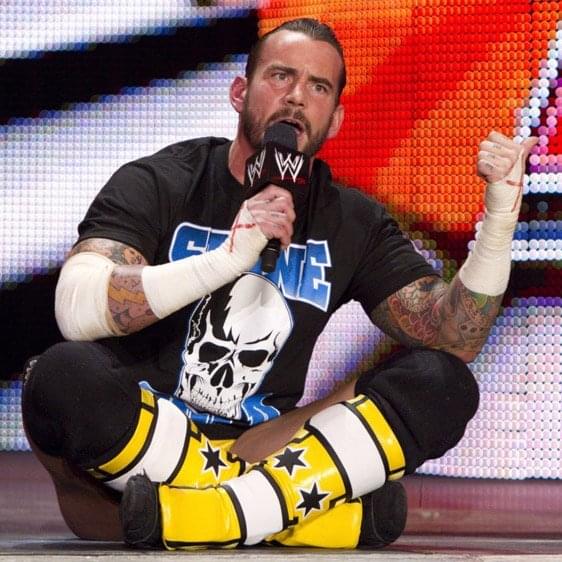
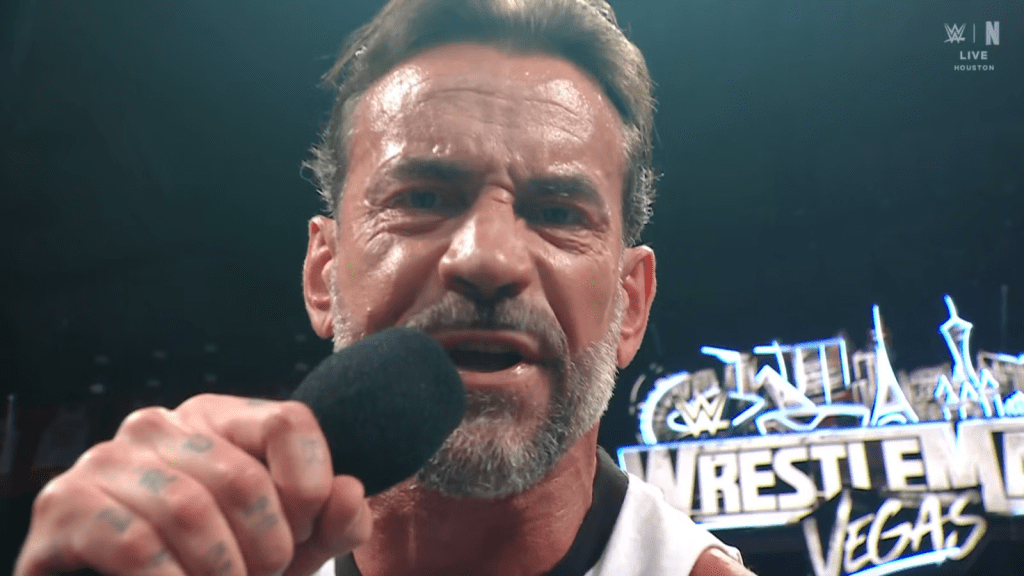
Last night on Raw, CM Punk (Phil Brooks) delivered his latest Pipe BombTM, and the internet is buzzing. The buzz is down to his indirect mention of Vince McMahon – the ‘weird old man’ – but, most importantly, his call for TKO to lower the ticket prices of WrestleMania. Once again, as a fandom, Punk has pulled us into this friction between reality and fiction. We want to believe that Punk has gone against his bosses, to speak out on the issues the people care about.
Firstly, as discussed on The Work of Wrestling podcast with Tim Kail, CM Punk is one of my all-time favourite performers. He is surely one of the best talkers in pro-wrestling history. The original Pipe Bomb is possibly the only WWE moment in the past 15-20 years that was truly must-see TV. It broke pro-wrestling back into the mainstream. Indeed, to his credit, CM Punk’s supreme ability as a performer is why today we’re once again debating what’s a work and what’s a shoot, what’s ‘real’ and what’s ‘fake’. His performance of authenticity is convincing. But it’s just that – a performance. It is commodified authenticity. Most certainly, he is not the ‘voice of the voiceless’. While I agree with Tim Kail’s annoyance at fans’ naivety on latest podcast ep, ‘A CM Punk Pipe Bomb?’, there’s a more important issue at stake here.
In his online essay on Hollywood film, ‘Robot Historian in the Ruins’, Mark Fisher writes how capitalism is “able to metabolise anti-corporate rhetoric by selling it back to an audience as entertainment”. Put simply, we are being sold the idea of genuine rebellion. This is a common tactic of capitalist enterprises, to note outside discord and rebellion, then pull it back into its structures, enfold it, and sell it back to their audience. Ultimately, the dissent is silenced, but we, as fans, are still given the illusion that we’ve influenced the powers that be. The WWE has been doing this for a long, long time. It did not start with CM Punk’s original Pipe Bomb; this is not the line in the sand that many commentators and academics suggest.
Credit: genius.com and WWE
Commodified authenticity in the 2005 love triangle storyline
This ‘metabolisation’ of anti-corporate noise happens at least twice in the 2005 love triangle between Lita/Matt Hardy/Edge. Firstly, part of the reason this storyline is so unique is how hard the WWE sold the idea of Lita/Dumas’ authenticity – much like CM Punk. Take her autobiography, A Less Traveled R.O.A.D., released in 2003. Within, Lita/Dumas describes her and Hardy’s initial reluctance to take their real-life relationship on-screen, and then how in time they fully embraced the idea. On page 233 she writes:
We suggested things like getting filmed in the shower together—we thought it could’ve been sexy as hell … since Matt and I really are together, why not take advantage of that fact?
It’s sad—creative spends so much time trying to force unique TV moments to happen, and yet they always blew off our ideas.
Though the Montreal Screwjob had long been and gone, and kayfabe’s meaning had significantly changed, this pulling back of the curtain, revealing of behind-the-scenes creative tension, was still rare in 2005. But, remember, A Less Traveled R.O.A.D. was published by WWE Books. Lita/Dumas’ words were produced under the surveillance of the WWE. So, in confessing her frustration at WWE Creative’s unwillingness to further commodify her relationship with Hardy on-screen, Dumas actually is commodifying her relationship with Hardy on the page. Take a second to think about the process of publishing this book – ghostwriters, editors, lawyers, proofreaders. There is ZERO chance of anything damaging to the WWE being published. We are being sold the idea of Lita/Dumas’ rebellious authenticity.
An even more obvious example is Hardy’s firing and re-employment. According to Meltzer, among others, Hardy was fired in April 2005 for making the news of Lita and Edge’s affair public. At this point, the WWE didn’t appreciate potentially losing control of this loud, powerful, scandalous off-screen narrative. During his unemployment, Hardy continued to rally his MFers, and at WWE live events, ‘We want Matt’ and ‘You screwed Matt’ chants could be heard. In the end, the WWE couldn’t ignore these chants and keep persisting with Lita as a babyface, so they put Lita and Edge together as an on-screen heel couple. And soon after, when the fans rejected Lita’s on-screen husband Kane as a stand-in for Hardy, they brought Hardy back. On his return, Hardy ‘crashed’ shows and was taken away by security, called Lita and Edge by their real names, Amy and Adam, did the forbidden by mentioning outside company Ring of Honor, and broke the fourth wall by using insider terms like ‘promo’. All this sound familiar? Maybe the 2011 Pipe Bomb isn’t so original. And the result of all this in 2005 – the WWE took ownership of the MFers and their dissent, and profited from their support of Hardy via merch sales and PPV buys.
For more examples of this kind of thing, see CM Punk’s original Pipe Bomb in 2011, Daniel Bryan’s Yes! Movement from 2014, KofiMania in 2019, and Cody Rhodes/Rock/Roman Reigns WrestleMania angle from 2024.
Close-reading CM Punk’s 6 April Pipe Bomb
It’s worth looking more closely at Punk’s promo to identify the tension between how we’re sold Punk’s authenticity and the heavy corporate messaging present.
First, why do we think CM Punk is speaking with authenticity?
- He tells us directly: ‘I won’t trade my authenticity for approval’ and ‘They can’t control me’. This plays into Punk’s past, most obviously the 2011 Pipe Bomb, but also the fall-out from it, in which he told GQ, “How much is real? That’s 100% real.”, and then, on leaving the WWE in 2014, spoke openly of the company’s effect on his wellbeing on Colt Cabana’s podcast. He also starts by sitting cross-legged, as he did in the original Pipe Bomb. This signals to the audience that what they’re about to hear is ‘truth’.
- He doesn’t categorise easily as face or heel. At times, the crowd boos him, and he acknowledges this, but doesn’t pander to them.
- He speaks about the behind-the-scenes power structures of the company, namely Roman’s cousin the Rock being on the Board of Directors of WWE’s owners, TKO.
- He indirectly mentions Vince McMahon, currently involved in a lawsuit in which he is accused of sexual assault, trafficking and coercion, and therefore not usually referenced on-screen: “You [Roman Reigns] are just a buck-toothed nepo baby who ate dog food for a weird old man”. Let’s be honest, this is a great line, ‘weird old man’ being McMahon. It refers to Reigns’ 2019 feud with Baron Corbin that revolved around dog food, and which was highly criticised by the WWE fanbase.
- The above line also reveals the creative process behind the on-screen action – and so, the ‘fakeness’ of the action – by eliminating Reigns’ antagonist Corbin, and instead drawing a direct line between the performer (Reigns) and the writer (Vince).
- The camera work – the camera is much closer to Punk than usual and he is mostly speaking directly into it. This shift from usual techniques tells us what we’re seeing is different, more significant, beyond the usual pro-wrestling promo.
And how can we know this is a performance of authenticity – a work?
- We are being sold to throughout the whole promo! Punk starts the promo by sitting on the Slim Jim logo. You could argue he’s obscuring it, but it’s still easily recognisable. He’s drawing attention to it.
- On the same point, he’s wearing 2 items of his own merchandise, both available to buy online (I doubt, and hope, this is not how Phil Brooks dresses on the street or at home).
- He uses his call and response catchphrase: “Is it great to be alive on a Monday night in Houston or what?” Note, this is not how people, including Phil Brooks, talk in real life.
- The camera work – he delivers part of the promo with the famous WrestleMania sign very strategically situated in the background. At other points, the CM Punk logo, WWE logo and WWE Raw logo are all prominent.
- The commentators, as always, instruct us how to feel: “The World Heavyweight Champion, no stranger to controversy. In fact, he’s a magnet for it.” In other words, ‘here he is again, going against the grain, doing the forbidden, you need to see this, and what he’ll do next. And in doing so, give us your money’.
- The presence of the old wrestling trope – hard-working babyface versus entitled, or nepo-baby, heel: “My tools are self-made … sharpened to a deadly point through years of self-belief and hard work, and sometimes spite, but always sacrifice … your tools are store-bought, hand-delivered, and they’re like you, they’re plastic … You’re safe and boring and plastic and saccharin, and you’re manufactured. I’m dangerous and you never know what I’m going to say.” Sorry Punk, mate, you are also saccharin and manufactured. This old trope can be seen as a metaphor for the struggle of the common man against ‘the machine’. Again, capitalism is, going back to Fisher’s words, “able to metabolise anti-corporate rhetoric by selling it back to an audience as entertainment”.
- He doesn’t refer directly to McMahon. There’s a bending of company rules perhaps, but not a breaking of them. Punk ends the promo, “My name is CM Punk and I have approved this message”, signalling that no outside approval – i.e. from Creative or his bosses – was sought by himself. But not referring to McMahon directly by name suggests an adherence to company policy. Why else not make your message clear for the audience?
The vast, vast majority of pro-wrestling promos are advertisements, sales pitches. The performer is almost always signposting us to the climax of their feud, where the conflict will be commoditised. Back in the day, we’d buy PPVs, or subscribe to the Network; now we subscribe to Netflix, ESPN. Along the way, the performers will repeat their catchphrases, which are helpfully emblazoned on t-shirts for us to buy.
The 2011 Pipe Bomb was a work, which sold the Money in the Bank PPV around the idea of a disgruntled Punk leaving the company with the WWE Championship. But due to the strength of Punk’s performance, it achieved much more, pushing pro-wrestling back into the mainstream. This 2026 Pipe Bomb should be read as an advertisement for reduced WrestleMania ticket prices. It will not have any deeper cultural resonance.
And why is believing in the ‘authenticity’ of Punk’s words important beyond pro-wrestling? By falling for this example of capitalism metabolising anti-corporate rhetoric, we will validate, and strengthen, the status quo, where the WWE has held a frankly unhealthy dominance for a long, long time now. This directly matters to fans due to the piss-poor, complacent creative the company has served up to us for twenty-five years now. But it also strengthens the WWE as a corporate entity. A powerful and influential corporate entity that is closely linked to the Trump administration and the Kingdom of Saudi Arabia.
Look, I sometimes buy WWE merch. I watch the shows. I’m excited for WrestleMania. I’m not completely anti-WWE, I’m just saying we shouldn’t get distracted by this friction between reality and fiction, and should remain aware of what the WWE is.
CM Punk is not the ‘voice of the voiceless’. He’s an extremely talented performer, who is – his own 2011 admittance more relevant than ever – ‘just a spoke on the wheel’.
Credit: TheSportster and WWE
Further reading:
Breihan, Tom ‘The GQ&A: C.M. Punk’, GQ.com, 13 July 2011
Fisher, Mark. “Robot Historian in the Ruins.” k-punk.org, 27 August 2008. Accessed on 10 September 2025. http://k-punk.org/robot-historian-in-the-ruins/.
Jansen, B, ‘Yes! No! … Maybe?”: Reading the Real in Professional Wrestling’s Unreality’, Journal of Popular Culture, 51(3), 2018, 635–656
Key, Adam, ‘“The Only Thing That’s Real Is Me”: CM Punk and the Rhetorical Framework of the American Dream’, Communication Studies, 71:4, 2020, pp. 601-611
Wilson Koh ‘“It’s What’s Best for Business”—“Worked Shoots” and theCommodified Authentic in Postmillennial Professional Wrestling’, Quarterly Review of Film and Video, 34:5, 2017, pp. 459-479
 Work Shoot Confessional
Leave a comment