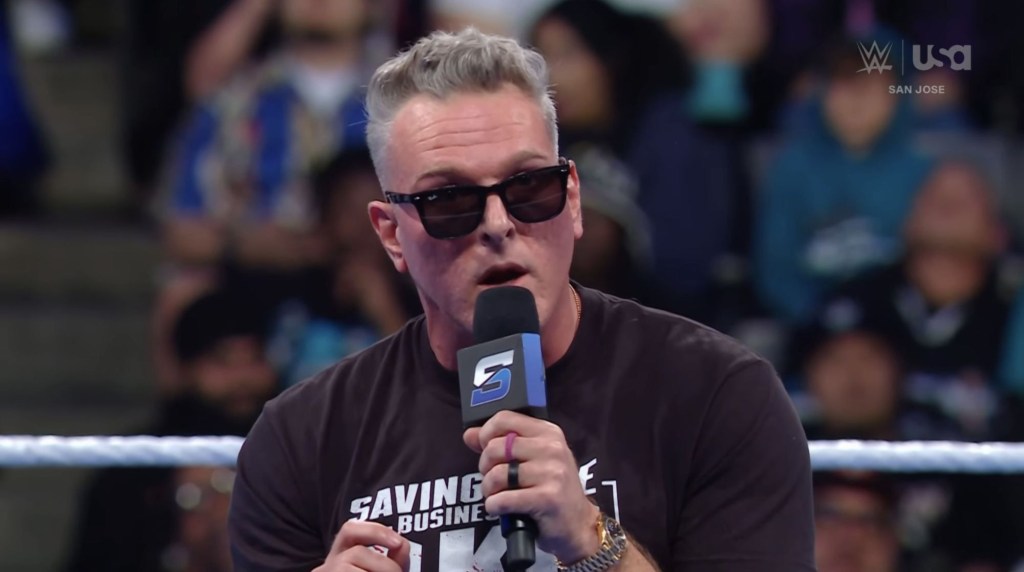
My other life, away from writing fiction and about pro-wrestling – my money-making, art-facilitating life, let’s call it – is in corporate reporting. By that, I mean I proofread and copy-edit annual reports, sustainability reports, half-year reports across a wide range of sectors. So, this hot topic of WrestleMania ticketing, and on-screen, “Is it a work? Is it a shoot?”, interests me from a corporate communications POV. Because, the real issue here is not whether CM Punk is the Voice of the Voiceless and Pat McAfee nothing but a goddamn corporate stooge, but a big corporate enterprise failing to reach its sales targets for one of its biggest live events of the reporting period and, in doing so, harvesting bad feeling among its stakeholders (customers, fans), and consequently looking for strategies to amend this.
Credit: WWE and bleedingcool.com
Meta-fiction and kayfabe: more than just a thrill
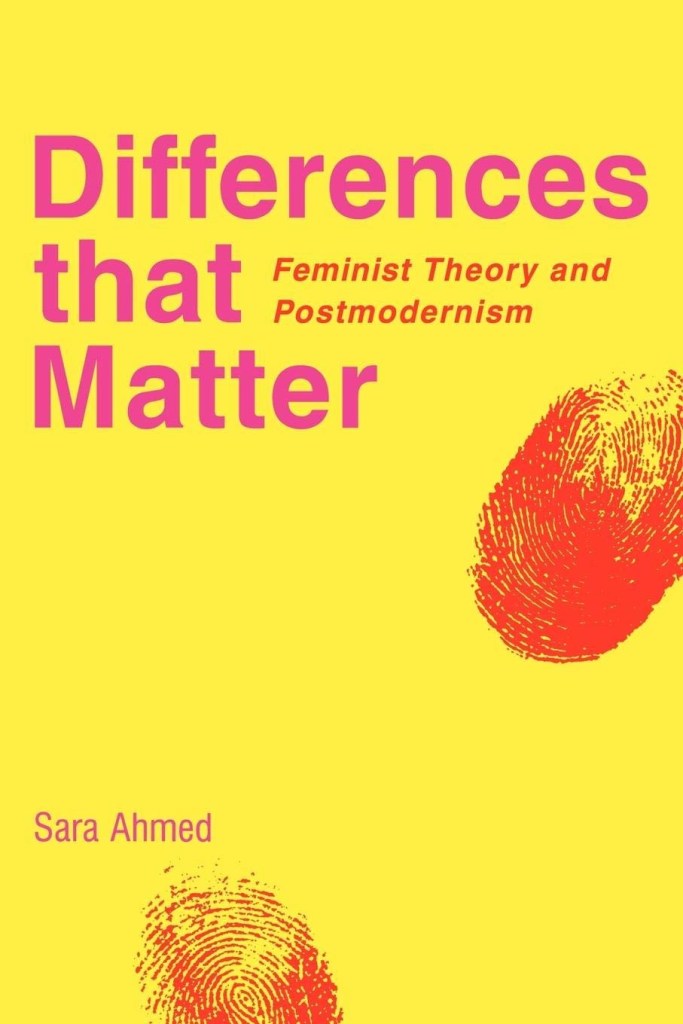
In her work, Differences that Matter (1998), the feminist theorist Sara Ahmed examines David Lynch’s film Blue Velvet, among others, to argue that postmodernism, as a way of reading or viewing, risks being only concerned with identifying signs of transgression from realism. In this view, through its use of self-referentiality (when a work of art refers to its own construction), irony and paratextuality, the value of (meta)fiction in literature and cinema lies in puncturing the assumed hierarchical dominance of classical realism. This means questions of content, in Ahmed’s argument, violent content, and the gender politics surrounding it, can be devalued, or even ignored. But what does all this have to do with pro-wrestling and corporate strategy?
Well, pro-wrestling, as we know, loves to oscillate between work and shoot, fiction and reality. In doing this, it is often self-referential, as Pat McAfee shows in his first promo on turning heel. He says, “Why do I turn on Netflix, and I see all of Gorilla XXX themselves episode after episode?” Here, he makes the self-referentiality easy for us to spot. He mentions ‘Gorilla’, the backstage area, just shy of the curtain, where the show’s directors reside, with screens and headpieces, directing the live action. Back when kayfabe was protected, this would’ve been a term unknown to all but insiders; Gorilla certainly wouldn’t be shown on TV. And though, nowadays, we do sometimes see passing shots of Gorilla on Raw and Smackdown, there’s a good chance McAfee is referring to Netflix’s WWE Unreal, a show literally about the construction of, and creative processes behind, Raw and Smackdown. This type of thing positions pro-wrestling as a meta-fiction where our attention is highly focused on what scholars Skeggs and Woods call, ‘the space and friction between reality and fiction’. In other words, we’re always furiously trying to figure out what is authentic and what is performed. To use Marion Wrenn’s idea, the real spectacle in pro-wrestling is not high-flying in-ring action, or a great promo, or a fantastically shocking heel turn, but the breaking of kayfabe itself. And this search for the authentic, this thrill of broken kayfabe, this fixation on the narrative form of worked shoot, is precisely what Ahmed is talking about with postmodernism. For Ahmed, the form of postmodernism distracts us from the harm of sexually violent content; in pro-wrestling, the form of worked-shoot distracts us from fan-ambivalent corporate strategy.
‘Look, we got this one wrong’ or ‘Just make it all part of the story’?
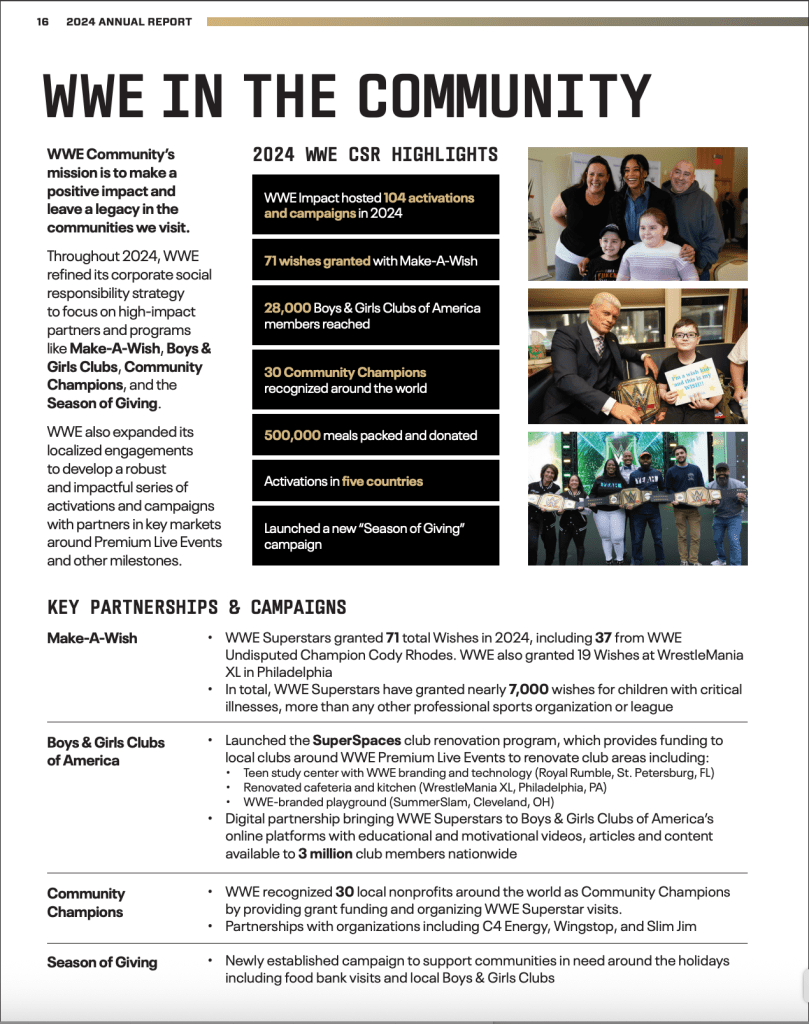
You might be interested to know that TKO’s 2024 annual report contains only 19 pages of ‘corporate storytelling’, complete with large images and crisp design, before shifting into bland compliance with the U.S. Securities and Exchange Commission, all colour literally drained from the page. As far as I can see, they do not report on DEI (diversity, equity, and inclusion) or sustainability. There’s just four pages on the WWE and UFC’s charitable endeavours, the term CSR (corporate social responsibility) used sparingly. To put it into context from someone who reads scores of these reports every year, that’s not much of an effort to tell us of the good they’re offering the world. Not much effort to show how they value their stakeholders – amongst others, us, their customers, the fans! Maybe we shouldn’t be surprised, given the organisation’s links with the Trump administration.
Maybe, in a way, they’re being more authentic. It had become common in annual reports for companies to talk about their authentic values, their identity. Call me super cynical, but at essence, a company’s most prominent value, if they’re being completely authentic and honest, must be to make money for its shareholders. Take, big corporation attitudes to DEI in recent years. First, the clamour to report on this, and outline positive attitudes backed up by clear policies, e.g. childcare or bereavement or adoption policies. Then, the Trump-inspired rowback on DEI (see the Guardian’s excellent podcast on this). This shows that companies will follow the trend that will lead to most profit, thus exposing their true value. But this lack of corporate storytelling, plus the on-screen use of worked-shoots, robs us, the fans, one group of TKO’s stakeholders, of something.
During the Covid-19 pandemic, my beloved Tottenham Hotspur soccer team, according to Forbes valued in 2019 at £1.2-1.3bn, announced they would make use of the U.K. Government’s Coronavirus Job Retention Scheme. This meant around 550 non-playing employees (normal guys and gals in office-based jobs or catering, for example) would be paid only 80% of their wages, via taxpayer money, while the players and high-level executives remained on full pay. Instant fan and media backlash resulted in a quick U-turn, with then-Chairman Daniel Levy announcing, “We regret any concern caused during an anxious time and hope the work our supporters will see us doing in the coming weeks, as our stadium takes on a whole new purpose [as a Covid-19 testing centre and food distribution hub], will make them proud of their club.” This is not to praise Tottenham Hotspur, far from it; how fricking tone-deaf of such a large organisation to take advantage of a government scheme intended for small-to-medium-sized businesses. And obviously, their U-turn and attempt to repair their public image was with profits in mind. But they did gesture towards the fans, at least performed regret. The WWE and TKO generally do not do this. Indeed, kayfabe is the ideal mechanism to avoid this. ‘Just make everything part of the story’, they say. No chance of a corporate message on the lines of, ‘Look, we got this one wrong. Here’s what we’re going to do about it.’
In an era where the majority of sports teams, and entertainment organisations, are holding their audience’s fandom to ransom, this could’ve been an opportunity to say, ‘Hey, we do value you.’ Instead they distract us with their usual worked-shoot nonsense, and sure enough, we’re all talking about it, and ticket sales, albeit at a reduced price, are rising.
But also, they’re harvesting bad feeling. A lot of people hate the Pat McAfee angle. Though I think McAfee is a fine heel, I’ve gone from being excited about WrestleMania to debating whether to watch at all. It just wasn’t necessary to fold all this ticket business into the narrative. It’s tiresome. It’s transparent. It’s bad TV. And if one day, these worked-shoots become too tired, if these narrative tools are no longer provoking the audience, if we all can see the difference between reality and fiction without any friction, then the WWE, and TKO, will have zero good will to fall back on. This day, I’d suggest, is growing ever closer.
Further reading:
Ahmed, Sara. Differences that matter: feminist theory and postmodernism. Cambridge University Press, 1998.
Skeggs, Beverley and Helen Wood. Reacting to Reality Television. Routledge, 2012.
https://www.theguardian.com/news/audio/2025/feb/10/how-trump-made-diversity-a-dirty-word-podcast
 Work Shoot Confessional
Leave a comment