The two characters I have chosen for this year-long project are Seth Rollins and Jade Cargill. As I suggested in my intro last week, I’m choosing these two because I find pinning down their characters difficult. Despite their success, their characters, in my opinion, are not well-defined. If you asked me to distill their motivations, what they stand for, into one sentence, I couldn’t do it.
Also, they have both displayed an ability to work as both face and heel throughout their careers, which I find interesting. Potentially, this could be an indication of deep characterisation, in which a character’s circumstances, relationships, strengths and weaknesses dictate whether they embrace the light side or the dark side of their persona. However, pro-wrestling is the ‘spectacle of excess’, as Roland Barthes said, so subtleties of character are not often present. Instead, we, the audience, are offered clear, indisputable, over-the-top signals of character, which play into simple categories of face and heel, good versus evil. What we’re watching, again to quote Barthes, is a ‘morality play’. So a face turn or a heel turn can often be a quick response to crowd reactions – the crowd being a co-constructor of the narrative, don’t forget – a shortcut to shifts in motivation. In other words, while a turn could be indicative of deep characterisation, it more than often is not.
When I conceived this project, naturally I thought of verbal character work, in-ring promos, backstage skits. Here, the character a) might directly tell us their motivations, and b) will interact with other characters, forming relationships. Yet, this first week neither character spoke; in fact, as you’ll see, one was absent altogether. This doesn’t mean, however, we can’t learn about character. It got me thinking about silences, gaps, absences in literature. There’s different, but connected, ways of thinking about this: the limits of language, emotions too heavy to be expressed, and how the reader/viewer is tasked with filling these gaps. Then there’s the old creative writing staple, Hemingway’s Iceberg Theory, in which most of the character is present below the surface, in what’s unsaid. Before I get into my close readings this week, the thought on silences I want to leave you with comes from Harold Pinter, the playwright:
“When true silence falls, we are still left with echo but are nearer nakedness. One way of looking at speech is to say that it is a constant stratagem to cover nakedness.
“We have heard many times that tired, grimy phrase, “failure of communication”, and this phrase has been fixed to my work quite consistently. I believe the contrary. I think that we communicate only too well, in our silence, in what is unsaid, and that what takes place is a continual evasion, desperate rearguard attempts to keep ourselves to ourselves.”
The echoing silence by Harold Pinter
https://www.theguardian.com/culture/2008/dec/31/harold-pinter-early-essay-writing
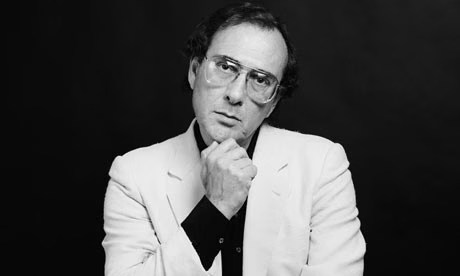
Credit: The Guardian
Seth Rollins (Monday Night Raw)
In the absence of a promo from Rollins this week, our sense of his character comes from three sources: 1) how other characters feel about Rollins; 2) the narrative themes suggested by the commentators; and 3) Rollins’ performance of anger and pain.
- Bron Brekker, the heel with whom babyface Rollins is feuding, made his return from injury at WrestleMania to attack Rollins. As he makes his entrance to the ring to speak, the audience is shown a replay of this attack, establishing context for what’s to come. As he enters the ring, behind him he has fellow stable mates the Vision, and manager Paul Heyman. In other words, he is protected. As he begins to speak, the camera oscillates between this wide shot of the group, and a close-up of Brekker in which we can only see Heyman in the background, evoking an idea of Heyman as the devil on his shoulder. Brekker speaks directly into the camera, fixing the viewer with Rollins’ point of view; this is perhaps why Brekker speaks of Rollins, rather than directly to, Rollins. And juxtaposing the images of protection, come Brekker’s words: “One year ago was when I became the leader of the Vision because Seth Rollins was too weak.” “Weak” is the key word; given Brekker is protected by three people, and the association of protection with the vulnerable, there is a contradiction at play here. This audience perceives Brekker as being in danger of Rollins’ retribution, and, given the layer of protection, Brekker must be aware of this, and fear it, yet Brekker instructs us that Rollins is “weak”. This contradiction is designed to provoke the audience into a negative reaction. Also, the audience knows that the Vision was conceived one year ago by Rollins and Heyman, not Brekker. In other words, Brekker is offering the audience clear misinformation, again provoking a negative reaction. We are instructed to hold beliefs contrary to Brekkers’ – Rollins is not weak, but heroic and brave. I will track in weeks to come whether this misinformation continues enough to play into ideas of post-truth politics.
- The commentators instruct us on two interesting themes surrounding this narrative. Firstly, they tell us Bron Brekker led “the overthrow of Seth Rollins in the Vision”. Here we have ideas of royalty and politics, something adjacent to Game of Thrones perhaps. Given Brekker’s position as a heel, we could generally link the idea of overthrow with negative connotations, supporting political structure, status quo and a certain type of conservatism. This might be interesting to read in the context of Trump’s presidency and the type of threats to his power (I write on the morning of the shooting incident at the White House press dinner). The second interesting theme offered by the commentators is that, “Rollins [is being] destroyed by the very thing he created”. This evokes nineteenth century novel Frankenstein, namely the idea that we should fear progress and intellect. Again, this would indicate a type of cultural and intellectual conservatism.
- Rollins’ music interrupts Brekker’s speech, informing us of the power associated with voice; Rollins takes Brekker’s voice, and so power is transferred. The camera shifts to a low, medium shot. The low shot evokes ideas of danger or threat. It also enables us to see Rollins’ attack coming before Brekker does; in other words, there’s a dramatic irony at play, where we, the audience, know more than Brekker. At this point, our knowledge is on the same level as Rollins, so again we are tied to Rollins’ point of view. And, this camera shot and chairshot to the back rewards our historical knowledge, given its similarities to Rollins’ betrayal of the Shield in June 2014. Two things with this: our stimulation on experiencing this Easter egg may flow back into our support of Rollins; and we may be offered a type of progress narrative here, where Rollins is now able to channel his instincts and strategies into fighting evil, rather than betraying his friends. What follows is Rollins’ performance of anger in moments of advantage, then pain with disadvantage. The overall narrative and characterisation offered appears to be the brave, hot-blooded warrior seeking vengeance. This is a struggle that has just begun and will not be easy to overcome.
Jade Cargill (Friday Night Smackdown)
Jade Cargill, and her dastardly friends B-Fab and Michin, did not appear on Friday Night Smackdown. I confess, after watching eight hours of WrestleMania, I’m not prepared to watch the whole of Smackdown just to note any brief mention of their absence on commentary. The reviews I have read suggest no great attention was paid to Cargill and friends’ absence, apart from Rhea Ripley, who defeated Cargill at WrestleMania, paying homage to Cargill’s performance. This is an unlikely respect given the bad blood between the two in the weeks leading to the match, and it may offer an open question of whether Ripley’s respect will be returned by Cargill.
But I’d like to focus more on her absence. What can we deduce from this? I’d suggest, firstly, that defeat is provoking a level of introspection from Cargill. This could be a moral introspection given the repeated three-on-one attacks on Ripley. This could also be a professional introspection in relation to her performance. Either way, her defeat at WrestleMania suggests that good has prevailed over evil. In response, maybe Cargill will seek repentance, which may be offered by Ripley’s respect; or, she may seek even more immoral means to achieve success. But currently, we are instructed that, unlike Rollins, who also suffered defeat at WrestleMania, her emotions are low, ‘cold’, not provoking an urgency of action.
On these lines, her absence may also suggest shame. Cargill has rarely lost in WWE, and a good proportion of the audience may also be aware of her long undefeated streak in rival promotion AEW. Therefore, in her absence, we can read the character’s embarrassment – she doesn’t want to show her face. Through this shame, and introspection, we are instructed that action and change is coming, provoked by a grand, embarrassing, yet perhaps noble, defeat.
Until next week…


Leave a comment