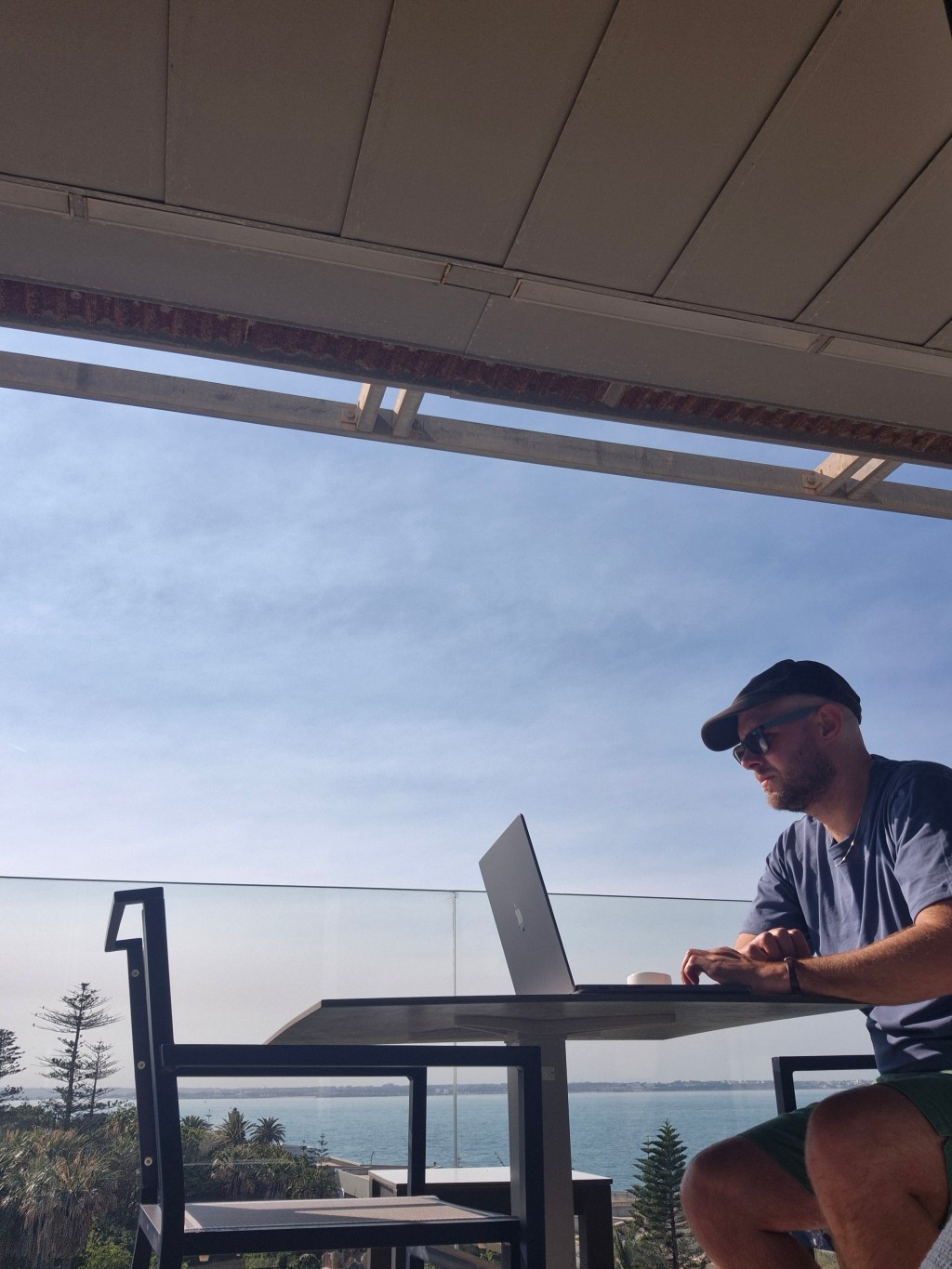
Trying to sound wise, I say, ‘The process of writing a novel has similarities with the narrative you’re writing – the pace needs to vary, sometimes fast, sometimes slow.’ And if you were to recognise some truth in this, you might then consider the first draft to be the time that pace is required. But what does this look like on the page, day to day, this semi-rapid accumulation of words?
Well, volume-wise approximately 1,500-2,000 words in my usual 4-5-hour writing stint (though I never set myself daily word targets). The language is definitely not as tight as it could be. And the research is left for later, so there’s placeholders in the text: overt ones looking like this [XXX], or settings/things/people where I have attempted some detail, but for now I move on with the faith that more contemplation time and drafting will provide more colour.
To be in a position of writing fiction day in, day out, without the interruption of work, is a privilege. It is therefore, in my humble opinion, an obligation to work, to earn creative momentum when you have the space to do so. Pace and consistency can enable momentum. And momentum hopefully results in that sweet spot where even when leaving the page, your novel or short story stays with you, and so you start to see ideas and links all around you in the real world.
That’s not to say there isn’t depth of thought in a first draft. For me, this novel is an outlier in that I’m writing it as part of a PhD. Before I carved out the time to finish this first draft, I’ve had near four years (I’m studying part-time, more on that in future columns) of oscillating between novel writing and related academic research. And the structure of a PhD, such as progression meetings, or obligatory admin, has forced me into doing more narrative planning than I likely would’ve done otherwise. Likewise, it has enforced more feedback than I would’ve usually sought at this stage. In other words, my path has quite well defined. Because of this, although it’s far from impossible, I wouldn’t expect the second draft to be radically different in terms of characters, focalisation, tone.
Yet still, a lot of it I’m feeling out as I write. Improvisation versus planning, right wrestling fans? Some parts do come easier than others. And I often end a writing session with notes on the scene I’ll start with the next day – thoughts that have, and could only have, emerged through the minute to minute, hour to hour of practising the craft.
And how will I use this first draft once it’s done? Tightening the language will be the first concern. Then I zoom out, look at the bigger picture. Either using outline tools on Word, or even printing out chapter and section titles and laying them on the floor, I start to track narrative tension and escalation on a structural level. This way, maybe certain chapters or scenes will present themselves as early candidates for the cutting room floor.
Finally, a complete first draft is a prime moment for feedback. The reader will have an approximation of the experience of plucking the novel from a bookshop shelf – a complete narrative, with a beginning, middle and end. From that feedback, I’ll be able to discern whether I’ve communicated all my ideas effectively on the page. No more ‘I’m planning to do this’ or ‘You’ll see how this part works once I’ve written this other part’. The page is now the sole place of judgement.


Leave a comment