When the pandemic hit in March 2020, annoyingly it seemed every man and his dog got to writing that novel they’d always knew they had in them. As for me, I was close to completing the fourth and final draft of my first novel, armed with line-edits from my writing mentor. The stage was set for me to finish this thing, which by then I’d been writing solidly for three years. I was living alone and I’d been lucky money-wise. Sure, the future was uncertain but in the short term my bucketload of spring freelance work hadn’t changed and I had nothing except food to spend money on, and no distractions. With a stretch of free days ahead of me, I opened the file on my laptop.
But I just couldn’t do it. Day in, day out, it wasn’t happening. As I’d done during previous bouts of writer’s block, I tried putting down the novel and working on short stories. But that didn’t work either. It wasn’t just that words wouldn’t come, but that my past experience of being in this position was somehow stripped away by the unique circumstances, sending my frustration was through the roof. There was this intense pressure on the writing. You must be getting so much writing done, family and friends were saying to me. Very quickly, I felt bad about myself.
Living alone in this situation was getting to me. Sure, I spoke to people on the phone, took advantage of the fortunate good weather to walk the beautiful city of York and went on bike rides with my one real lockdown purchase. But the uncertainty was too much. Worrying about people breaking lockdown rules. Those selfish people who weren’t thinking about folk like me, isolated in their homes. At the same time, who was I to think I had it bad? I had money, a good-sized flat, my health was fine. On the other hand, the hapless fucking government. When was this all going to end? How could I break these patterns of thought?
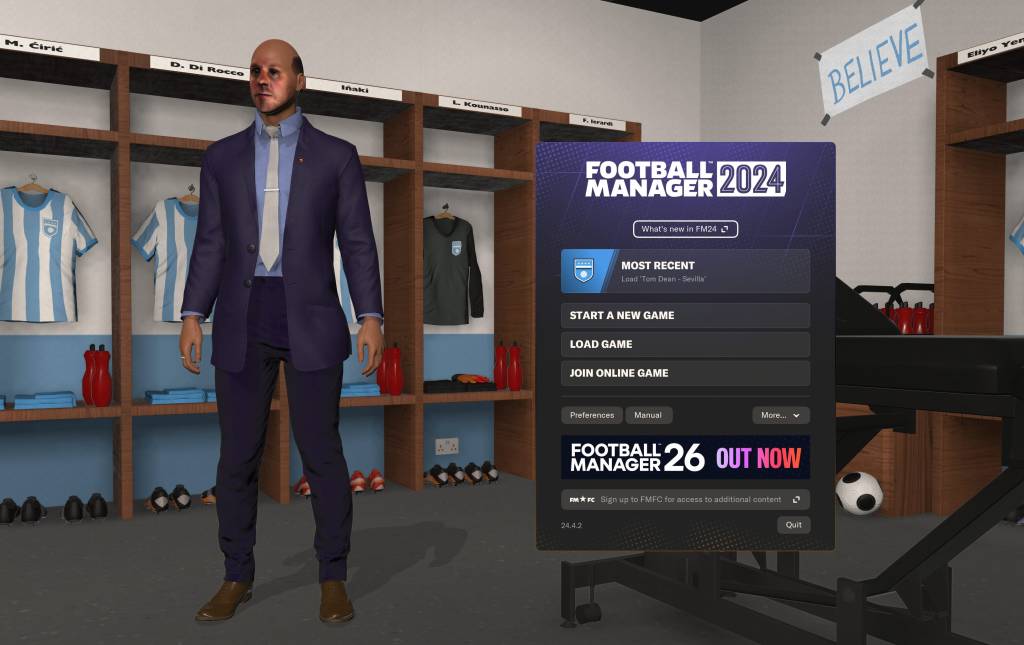
I hadn’t played Football Manager, formerly known as Championship Manager, for around a decade. For those unaware, it’s a soccer management simulator in which you pick the team, set the tactics and arrange transfers of players, while the modern-day versions also include training, press conferences and team talks. And there’s a good reason why I hadn’t played this in a decade – it’s pretty addictive. I’ve been on-and-off obsessed with it since I was twelve. At sixteen, I begged a friend to take my CD to his house, so I didn’t completely fuck up my exams. I’ve sacked off night-outs. I’ve phoned in sick to girlfriends (sorry!) to stay at home and keep playing. I’ve kept playing way past midnight and gone to work the next day. Look, everyone has these stories – they’ve become folklore. But this isn’t a story about how the game ruined my life. Far from it. During the pandemic, this game soothed my mental health.
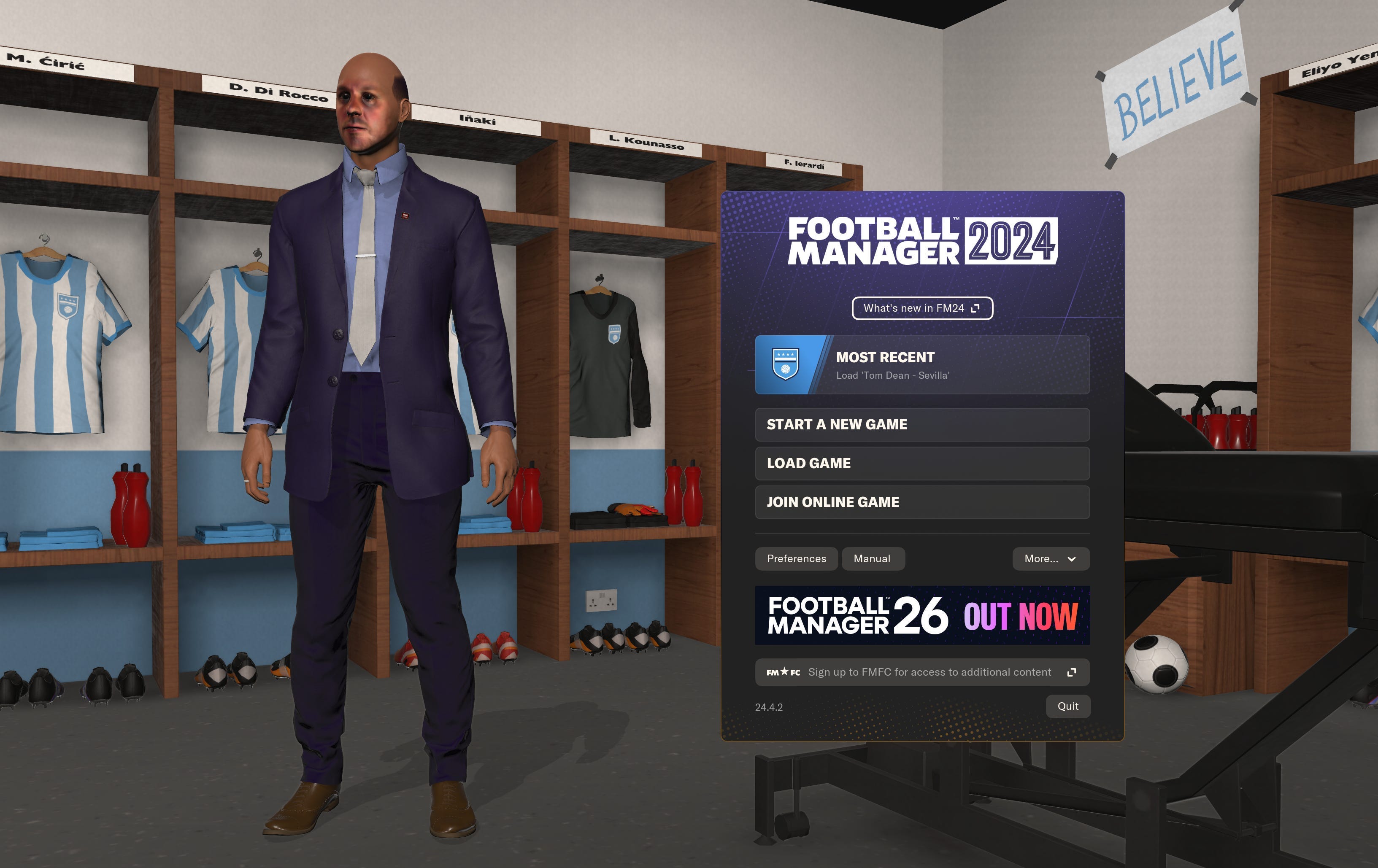
When I play this game I am completely absorbed. My self drops away, my worries disappear. It calms me. It’s something akin to meditation. In April 2020, something made me look at the latest version, and then buy it. And it acted as a positive influence for the rest of 2020. In the autumn, I was able to finish my novel and submit it to agents (unsuccessfully, but that’s okay). This period – and some of the positive conversations around video games during the pandemic – have helped me to see my use of the game as a good thing, and allowed me to go on to use it since, in moderation, as a mental health crutch.
I’ve brought up the game during therapy sessions, and my counsellor speculated it being a way to regain control in times of anxiety. I do agree with this, but there’s also something in the mechanics of the game that soothes me. The rhythm of how time passes with the click of a button. The walls of text and numbers that appear impenetrable to the uninitiated but I can navigate almost with my eyes closed. The way clicking on a player’s name can uncover a hidden history. The game graphics, where mini men skate about on plump-green pitches, their shadows scattering in front of a jumble of fans. These fans pump their arms in synchronicity while below, players’ movements are mechanical, predictable to a point, but with an uncertain outcome. The best bit – the game leaves so much narrative space for the player to fill in, so as I go I’m adding commentary, public opinion, players’ and coaches’ private lives. It becomes a world which I’m co-creating, in which I’m completely absorbed. In fact, the one thing I did write during the height of the pandemic was a short story with intertwined narratives: one, the autofictional story of returning to an old relationship; and two, a fictional sporting story inspired by one of my Football Manager saves. I’m still trying to get this story published, but I’m pretty proud of it. It will find a home. I stand firm in my belief that Football Manager deserves a place in literary fiction.
I’ll end on a quote from philosopher Eugen Fink: ‘In play we enjoy the possibility of retrieving lost possibilities – indeed, even far beyond this, of attaining the openness of a mode of existence that is not determined and not bound. We regain, in a sense, our possibilities of acting anew.’ Sport, fiction and video games are all ways to play. To retrieve lost possibilities. To soothe our tired minds.
***
This month I am raising money for the mental health charity CALM, by playing sixty hours of Football Manager. This article was not a plea for sponsorship, but if you would like to support, the link is below. Thank you.
https://www.justgiving.com/fundraising/tom1790859064915


Leave a Reply